

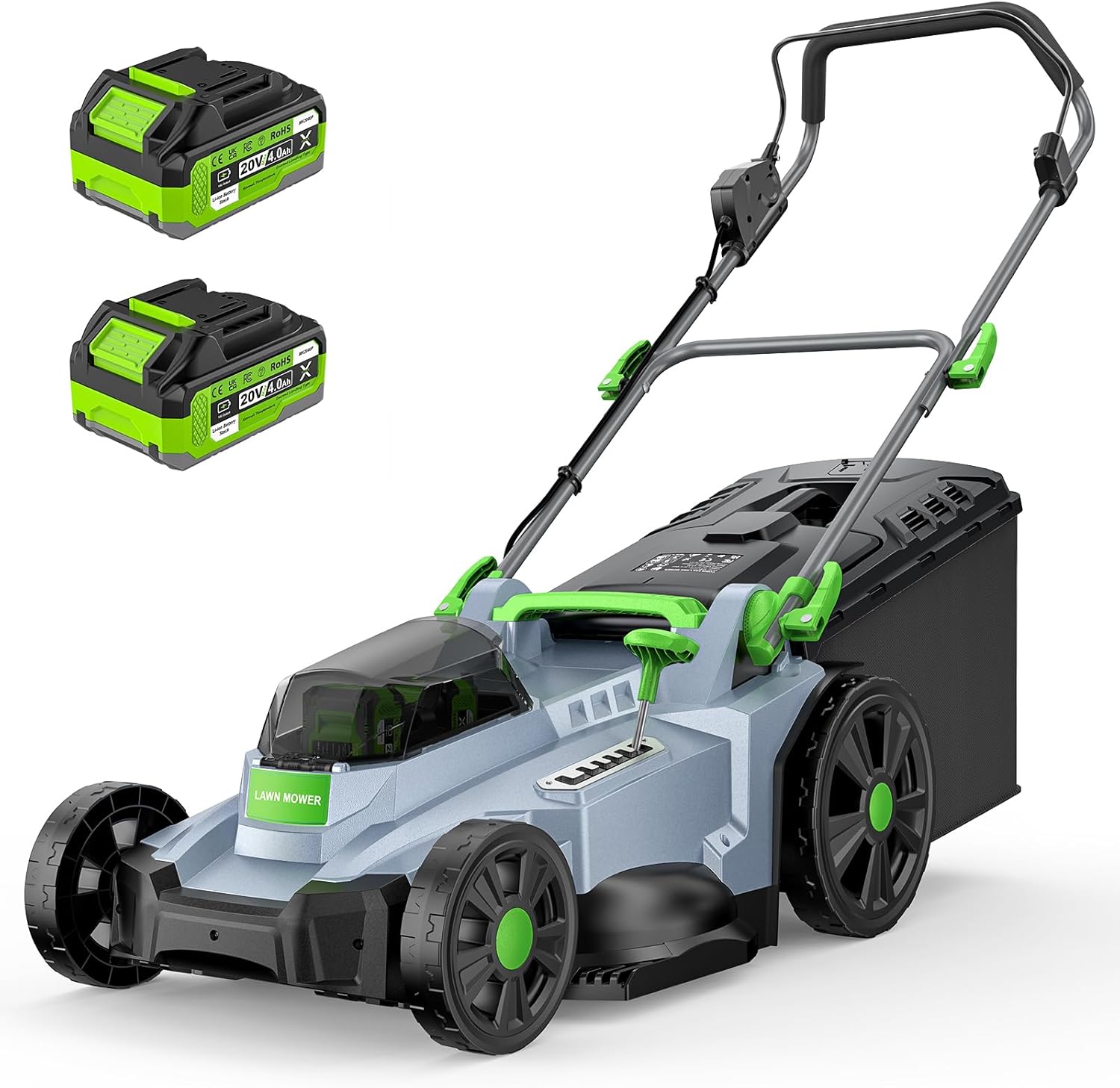
The blade that fits a Hyper Tough lawn mower depends on the mower’s model number, deck size, blade length, center hole pattern, outer hole spacing, blade width, and blade type. You should not buy a replacement blade based only on the mower’s deck size.
For example, a 20-inch Hyper Tough mower usually needs a blade close to 20 inches long, but the center hole, mounting pattern, and blade shape still need to match your exact mower model. A blade that is the right length but has the wrong mounting hole may not fit safely.
Before buying a new blade, check your mower model number, owner’s manual, and old blade measurements.
For replacement part help, read:
What Parts Fit a Hyper Tough Lawn Mower?
Quick Answer
If you are asking, “what blade fits a Hyper Tough lawn mower?”, the safest answer is: use the blade listed for your exact Hyper Tough mower model number.
To find the correct blade, check:
- Mower model number
- Deck size
- Blade length
- Center hole shape and size
- Outer hole spacing
- Blade width
- Blade lift style
- Mounting pattern
- Whether the blade is for mulching, bagging, or side discharge
A universal mower blade may fit some Hyper Tough mowers, but a model-specific blade is usually the safer option because it is designed to match the mower’s mounting system and cutting deck.
Why Model Number Matters
The model number matters because Hyper Tough mower blade fit can change by model, deck size, production year, and blade mounting design.
Two Hyper Tough mowers may both have a 20-inch deck, but that does not always mean they use the exact same blade. The blade length may be similar, but the center hole, mounting holes, blade shape, and lift design may be different.
Your model number helps confirm:
- Correct blade size
- Correct center hole
- Correct mounting pattern
- Compatible replacement part
- Proper blade type
- Manual-based part recommendation
If you cannot find your model number, use this guide:
Where Can I Find Hyper Tough Lawn Mower Manual?
Do Not Buy a Blade Based Only on Deck Size
Deck size is important, but it is not enough by itself. A 20-inch mower does not always use the same blade as every other 20-inch mower.
A blade must fit the mower’s spindle or blade adapter correctly. If the mounting pattern is wrong, the blade may wobble, vibrate, cut unevenly, or become unsafe.
Before buying, compare the new blade with the old blade or check the manual.
How to Measure a Mower Blade
If you do not have the exact replacement part number, you can measure the old blade. Remove the blade safely before measuring it.
Before removing the blade, disconnect the spark plug wire on a gas mower, remove the battery on a battery mower, or unplug the cord on an electric mower.
For a full removal guide, read:
How to Change Hyper Tough Lawn Mower Blade
1. Blade Length
Measure the blade diagonally from one cutting tip to the opposite cutting tip. Do not measure straight across the center from end to end unless the blade design allows an accurate tip-to-tip measurement.
The replacement blade should match the original blade length closely.
2. Center Hole
The center hole is the main mounting hole in the blade. It may be round, star-shaped, bow-tie shaped, or another pattern depending on the mower.
The new blade must match the center hole style and size.
3. Outer Holes
Some mower blades have outer mounting holes in addition to the center hole. Measure the spacing between these holes from center to center.
If the outer holes do not match the blade adapter, the blade may not install correctly.
4. Blade Width
Blade width is the distance from the front edge to the back edge of the blade. A blade that is too wide or too narrow may not match the mower’s cutting design.
5. Blade Lift
Blade lift refers to the raised wing or curved section of the blade. High-lift blades create more airflow for bagging, while mulching blades are shaped to keep grass clippings circulating under the deck.
The wrong lift style can affect cutting, bagging, mulching, and mower performance.
6. Mounting Pattern
The mounting pattern includes the center hole, outer holes, hole shapes, hole spacing, and blade adapter fit. This is one of the most important compatibility checks.
If the blade does not sit flat and secure against the adapter, do not use it.
Blade Compatibility Table
| What to Check | Why It Matters | Mistake to Avoid |
|---|---|---|
| Model number | Confirms the correct blade for your mower | Buying a blade only by brand name |
| Deck size | Helps narrow down blade length | Assuming all 20-inch mowers use the same blade |
| Blade length | Must match cutting deck clearance | Installing a blade that is too long or too short |
| Center hole | Must fit the blade adapter | Forcing a blade with the wrong hole shape |
| Outer holes | Needed for proper mounting on some models | Ignoring hole spacing |
| Blade width | Affects cutting performance and balance | Using a blade that does not match the original shape |
| Blade lift | Affects mulching, bagging, and discharge | Using a bagging blade when you need a mulching blade |
| Blade thickness | Helps with strength and fit | Using a weak or incorrect blade |
| Blade orientation | Keeps cutting edge facing the right direction | Installing the blade upside down |
Universal Blade vs Model-Specific Blade
A universal blade may fit some Hyper Tough mowers, but it is not always the best choice.
Universal blades are designed to fit multiple mower brands and models. They may include adapter washers or different hole options. This can be useful when an exact replacement is hard to find.
However, a model-specific blade is usually safer and more reliable because it is made to match your mower’s deck, spindle, adapter, and cutting design.
When a Universal Blade May Fit
A universal blade may work if:
- The blade length matches
- The center hole matches or includes the correct adapter
- Outer holes match if required
- The blade sits flat and tight
- The blade does not hit the deck
- The blade type matches your mowing style
Why Model-Specific Is Safer
A model-specific blade is safer because it reduces the risk of poor fit, vibration, uneven cutting, and incorrect mounting.
If you are unsure, use the blade listed in your owner’s manual or match the old blade exactly.
What Size Blade Does a 20-Inch Hyper Tough Mower Use?
A 20-inch Hyper Tough mower usually uses a blade made for a 20-inch cutting deck, but you still need to confirm the exact blade length and mounting pattern.
Do not buy a blade just because the package says “20-inch mower blade.” You need to check:
- Actual blade length
- Center hole shape
- Center hole size
- Outer mounting holes
- Blade lift
- Blade type
- Model compatibility
The best method is to remove the old blade and compare it with the replacement blade before installation.
Which Way Does the Mower Blade Go On?
A mower blade must be installed in the correct direction. If the blade is upside down, the mower may cut poorly, tear the grass, vibrate, or fail to discharge clippings correctly.
In most cases, the cutting edge faces the direction of blade rotation, and the raised wing or lift side points upward toward the mower deck.
Many blades have markings such as:
- “Grass side”
- “This side down”
- “Bottom”
- “Deck side”
- “This side up”
Follow the stamped marking on the blade if it has one. If there is no marking, compare the blade with the old blade before removing it or take a photo before installation.
Why Is My Mower Cutting Unevenly?
Uneven cutting can happen when the blade is dull, bent, installed incorrectly, or not balanced. It can also happen if the deck is clogged or the mower wheels are set at different heights.
Common causes include:
- Dull blade
- Bent blade
- Loose blade bolt
- Blade installed upside down
- Deck packed with grass
- Uneven tire or wheel height
- Damaged blade adapter
- Mowing too fast
- Cutting very tall grass in one pass
Clean the mower deck before blaming the blade. Heavy grass buildup under the deck can block airflow and cause uneven cutting.
Helpful cleaning guide:
How to Clean Hyper Tough Lawn Mower
Signs Your Blade Needs Replacement
A mower blade does not last forever. It can become dull, bent, cracked, rusty, or damaged by rocks, roots, sticks, and normal mowing.
Uneven Cut
If your lawn has high and low patches after mowing, the blade may be dull, bent, or incorrectly installed.
Torn Grass
A sharp blade cuts grass cleanly. A dull blade tears grass, leaving rough brown tips that can make the lawn look unhealthy.
Vibration
Strong vibration after hitting an object may mean the blade is bent or unbalanced. Stop using the mower until the blade is inspected.
Bent Blade
A bent blade should be replaced. Do not try to straighten a badly bent mower blade because it may be weakened.
Dull Edge
A dull edge can often be sharpened if the blade is otherwise in good condition.
Rust or Cracks
Surface rust may not always require replacement, but deep rust, cracks, or metal damage are serious signs that the blade should be replaced.
Should I Sharpen or Replace the Blade?
You can sharpen the blade if it is dull but still straight, balanced, and free from cracks. Sharpening is a good option when the blade edge is worn from normal mowing.
Replace the blade if it is:
- Bent
- Cracked
- Badly rusted
- Deeply chipped
- Severely worn
- Out of balance
- Damaged near the mounting hole
- Causing strong vibration
If the blade is unsafe, replacement is better than sharpening.
How Often Should I Replace a Mower Blade?
How often you replace a Hyper Tough mower blade depends on how often you mow and the condition of your yard.
You may need to replace the blade sooner if you often hit:
- Rocks
- Roots
- Sticks
- Hard soil
- Uneven ground
- Thick weeds
As a general rule, inspect the blade several times during the mowing season. Sharpen it when the edge becomes dull and replace it when it becomes bent, cracked, badly rusted, or too worn to sharpen safely.
Safety Tips Before Changing the Blade
Before changing or measuring a mower blade, follow these safety steps:
- Turn the mower off completely
- Disconnect the spark plug wire on gas models
- Remove the battery on battery models
- Unplug the cord on electric models
- Wear heavy gloves
- Use a block of wood to stop blade movement
- Do not touch the sharpened edge directly
- Do not work under a mower that is not stable
Blade replacement can be simple, but safety matters because mower blades are sharp and heavy enough to cause injury.
Final Answer
The blade that fits a Hyper Tough lawn mower depends on the mower model number, deck size, blade length, center hole, outer hole spacing, blade width, blade lift, and mounting pattern. Do not buy a blade based only on deck size.
Before buying a replacement, find the mower model number, check the manual, and measure the old blade. A model-specific replacement blade is usually the safest choice, while a universal blade should only be used if all measurements and mounting points match correctly.
For more Hyper Tough mower help, visit:
Hyper Tough Lawn Mower Homepage
FAQ
What blade fits a Hyper Tough lawn mower?
The correct blade depends on your Hyper Tough mower model number, deck size, blade length, center hole pattern, outer hole spacing, blade width, and blade type. Use the manual or old blade measurements before buying.
Can I use a universal blade on a Hyper Tough mower?
You may be able to use a universal blade if the length, center hole, mounting pattern, and blade type match your mower. However, a model-specific blade is usually safer and more reliable.
How do I measure a mower blade?
Measure the blade diagonally from one cutting tip to the opposite cutting tip. Also measure the center hole, outer hole spacing, blade width, thickness, and mounting pattern.
What size blade does a 20-inch Hyper Tough mower use?
A 20-inch Hyper Tough mower usually uses a blade made for a 20-inch deck, but you must still confirm the actual blade length, center hole, mounting holes, and model compatibility.
Which way does the mower blade go on?
The cutting edge should face the direction of blade rotation, and the raised wing usually points upward toward the mower deck. Follow any stamped markings such as “grass side” or “this side down.”
Why is my mower cutting unevenly?
Uneven cutting can be caused by a dull blade, bent blade, loose blade bolt, blade installed upside down, clogged deck, uneven wheel height, or mowing too fast.
Should I sharpen or replace the blade?
Sharpen the blade if it is dull but straight, balanced, and not cracked. Replace the blade if it is bent, cracked, badly rusted, deeply chipped, or causing vibration.
How often should I replace a mower blade?
Inspect the blade throughout the mowing season. Replace it when it is bent, cracked, badly worn, heavily rusted, or no longer safe to sharpen.